Exploring Athens: 5 Amazing Things to do
Widely known as the birthplace of democracy and sporting competitions, the home of gyros and souvlaki and favoured today for being the gateway to beach parties and island hopping. Athens is one of the oldest cities in the world and so rich in history that stepping foot in the city feels like you’re walking across pages of an encyclopedia.
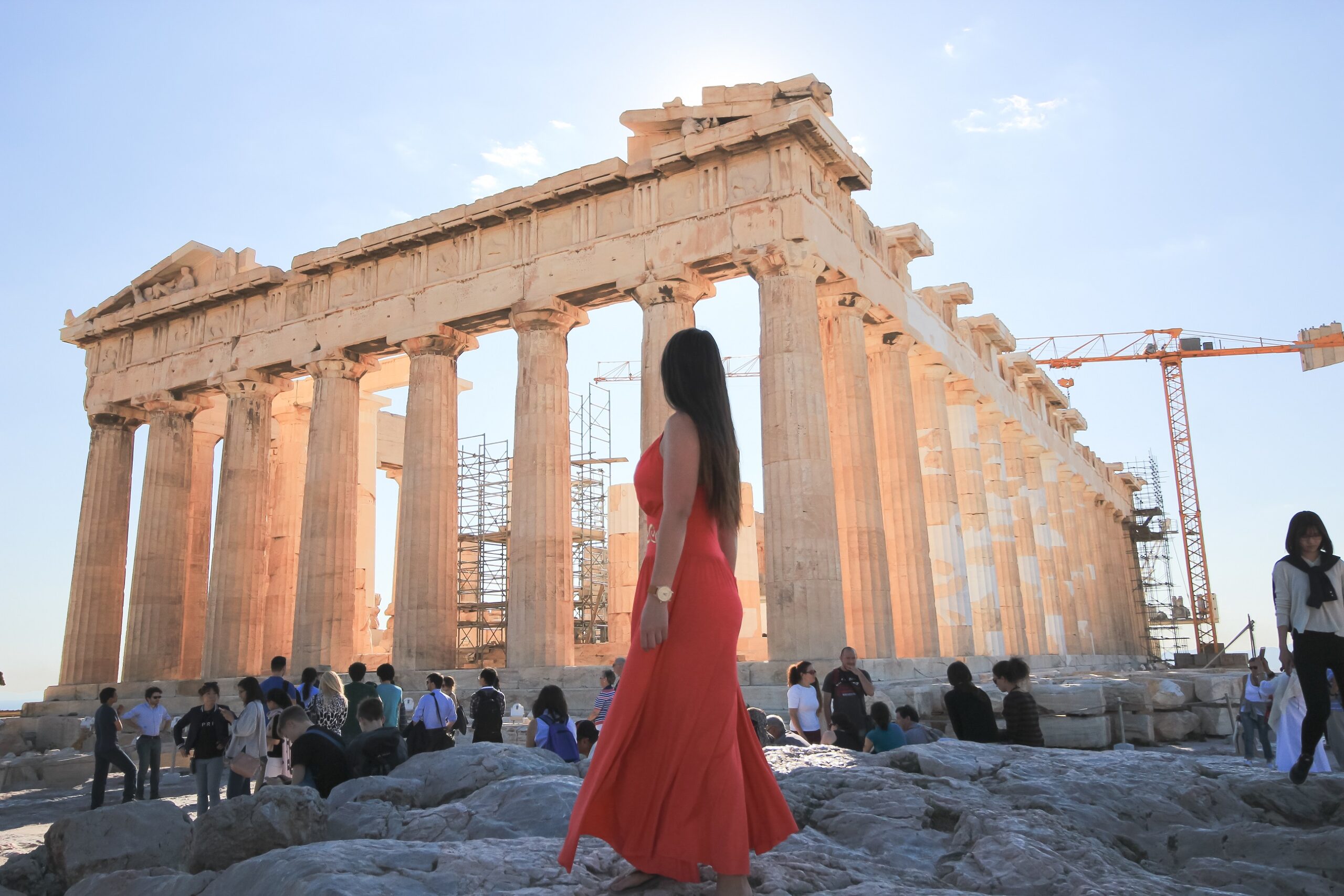
My first lesson in geography as a wee 9-year-old introduced me to the wider world outside of New Zealand and ignited the flame that would later push me to travel Europe as a lone 22-year-old. 2004 was the year the Olympics was held in its home city of Athens and my love for history began, 13 years later in 2017 I stood excitedly in the shadow of the Parthenon on top of the Acropolis with breathtaking views overlooking Athens. Feeling a sense of accomplishment for 9-year-old Michaela who once dreamed of visiting the gift to Goddess Athena.
Athens is one of the worlds oldest cities with human presence dating back to 11th millennia BC.
Acropolis
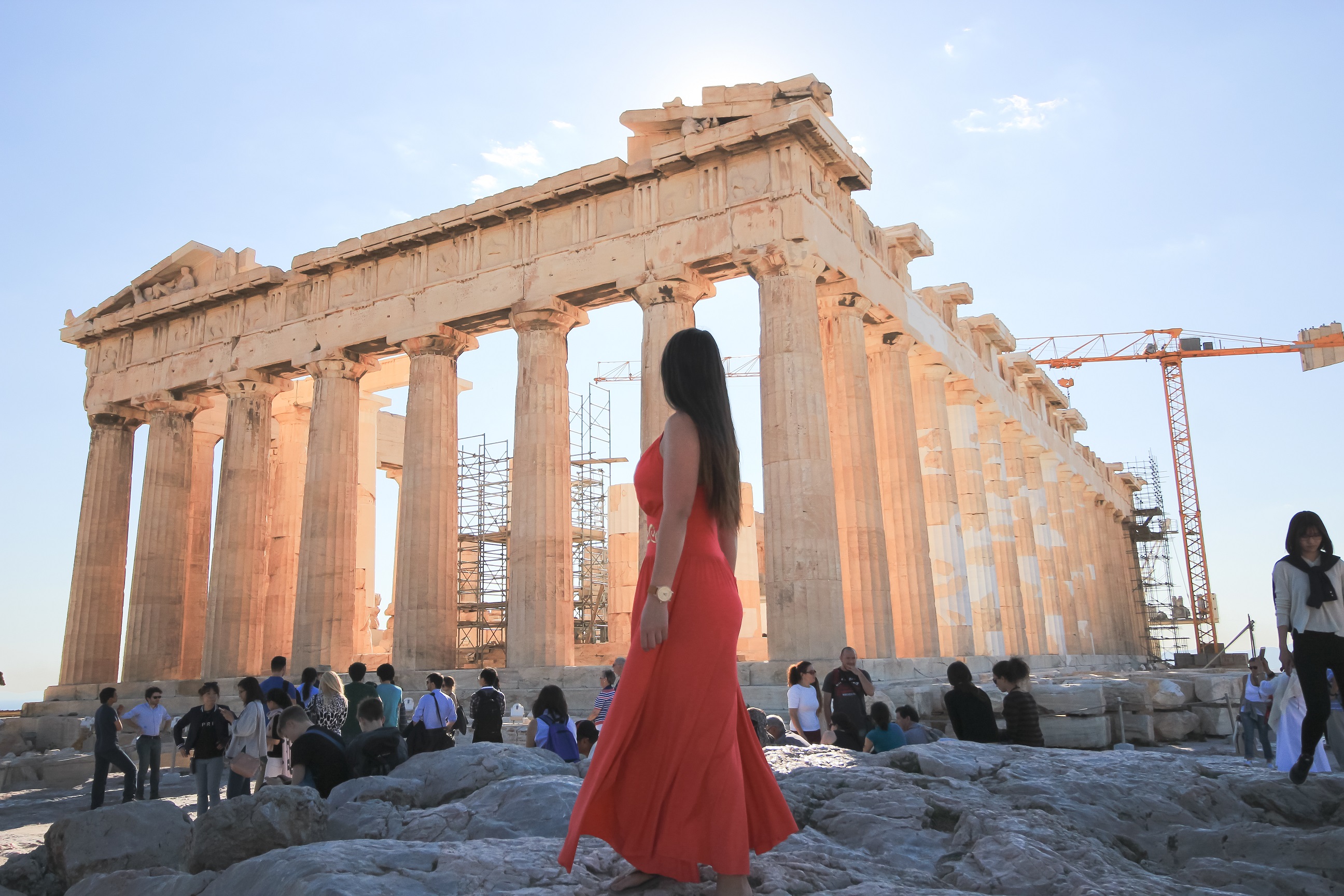
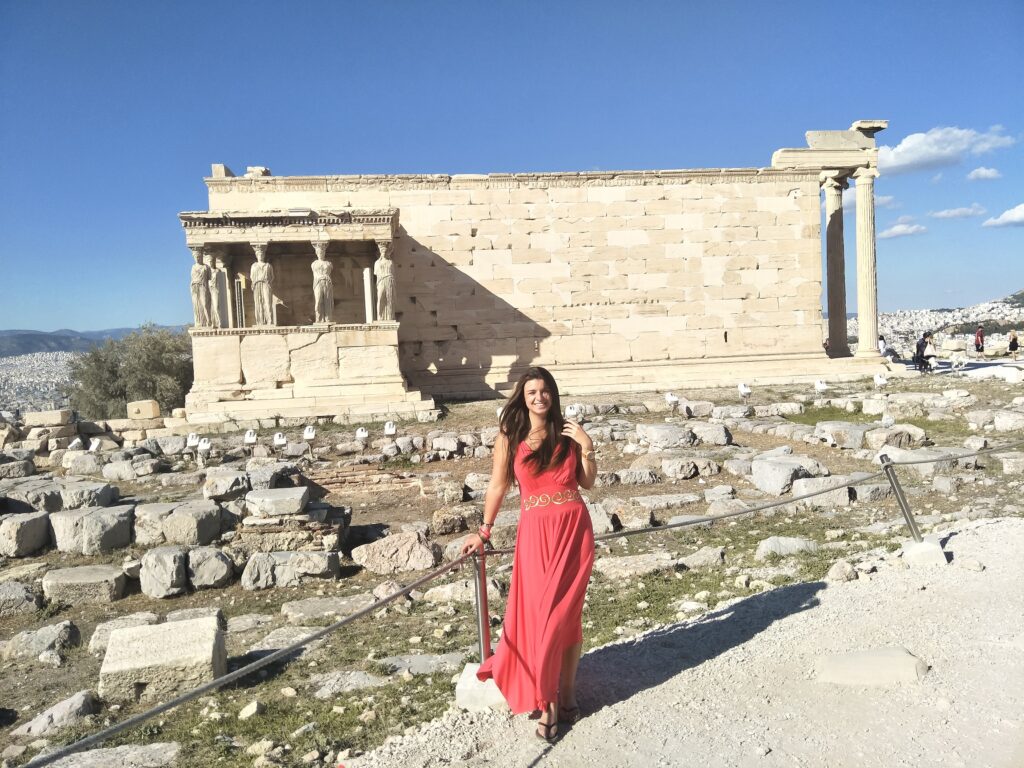
The Athens Acropolis is the ancient, fortified city of Athens, and contains the remains of several ancient buildings dating back to the 5th Century BC. It has been a site of significant important since the Neolithic period and today serves as a tourist hot spot in Athens. The Acropolis sits 150m above sea level and has a surface area of about 3 hectares
The Acropolis plays a significant role in the ancient history of Athens and education on early civilization, with evidence that the hill was inhabited as early as the 4th millennium BC. The Acropolis Restoration Project began in 1975 to reverse the decay of the 21 ancient structures found on the Acropolis which means the hill is constantly under construction to help preserve these magnificent pieces of history for centuries to come.
Parthenon
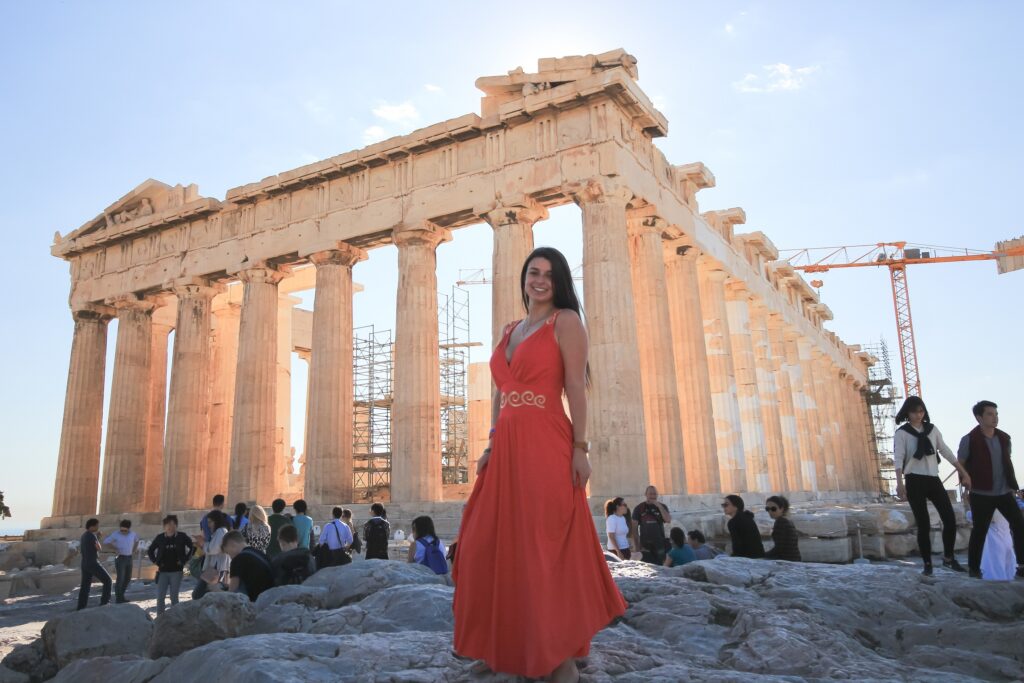
The Parthenon is the most iconic and largest structure on the Acropolis, which is an ancient temple that was dedicated to the goddess Athena after Greece saw victory over Persian invaders. Built in 5th century BC primarily of marble, the base sits at 69.5 meters long and 30.9 meters wide.
Odeon of Herodes Atticus
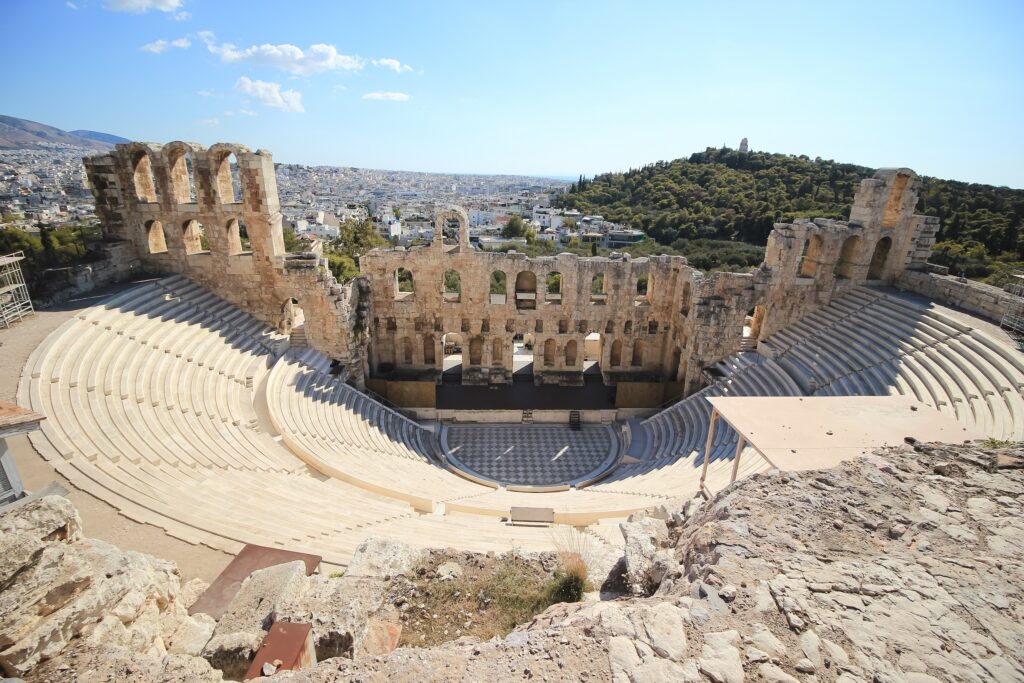
The Odeon is a stone Roman amphitheater (an outdoor entertainment venue) located on the southwest slope of the Acropolis. The Odeon was built in 161AD by Herodes Atticus in memory of his Roman wife. The Odeon originally had a 3 story stone front wall and a cedar timber roof. It could seat 5,000 people and played an important role in musical entertainment until it was destroyed and left in ruins in 267AD. The Odeon was renovated in the 1950’s and still plays an important part today by hosting concerts and the Athens Festival.
Zappeion Hall
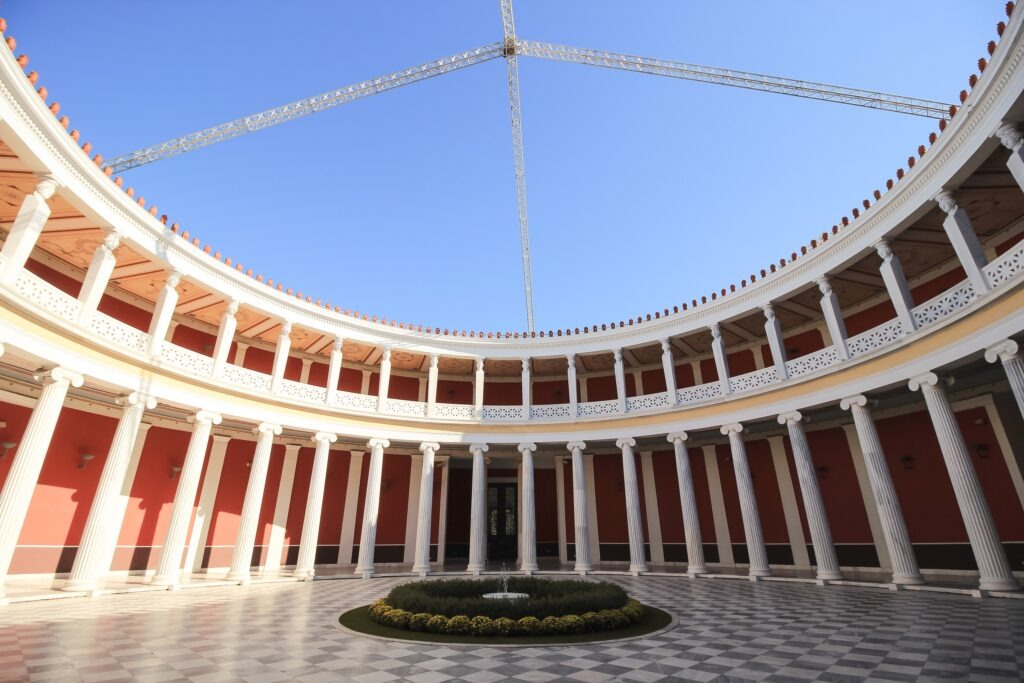
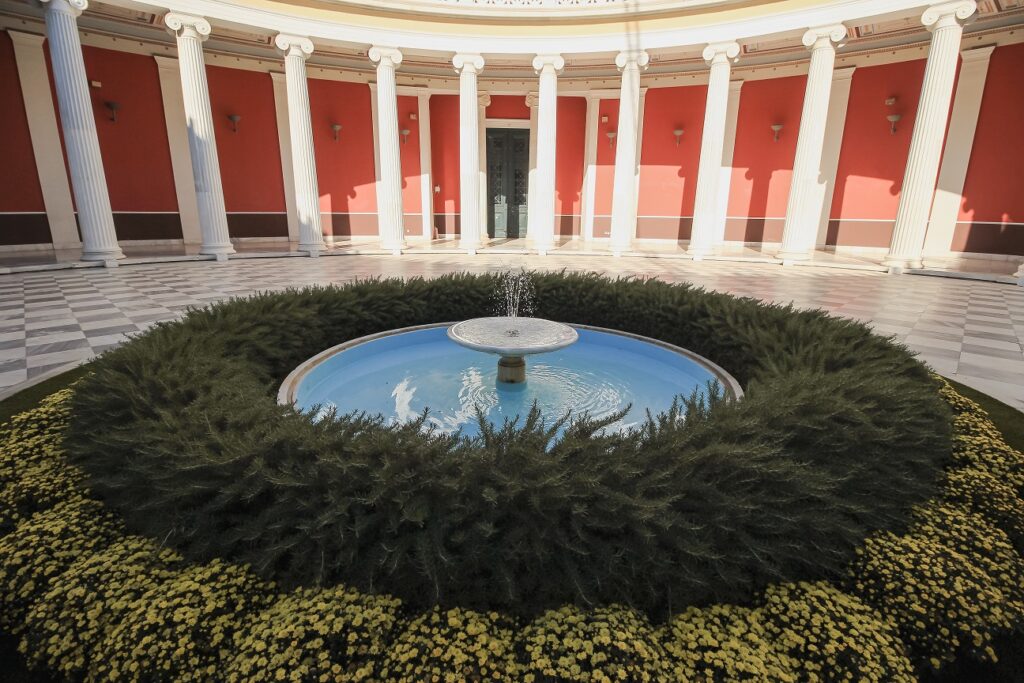
The Zappeion Hall is the first building in the world specifically erected for the revival of the Olympic Games of 1896 where it was the home of the fencing tournament. The land was allocated by the Greek government almost 30 years prior and construction began under guidance by Danish architect Theophil Hansen.
Over the last 120 years the Zappeion Hall has been home for a variety of uses; serving as the home of the country’s first national radio station, hosting the organising committee and press centre for the 2004 Olympic games, while also being home of historically significant events like signing Greeks accession to the European Community in 1979 which took place in the buildings mable-clad atrium.
For a more morbid part of Zappeion Halls history; Evangelos Zappas who is one of the founding fathers of the modern Olympic Games, has his head buried in the wall of the Zappeion as he did not live long enough to see the completion of the building.
Is the Zappeion Hall Worth Visiting?
Yes the Zappeion Hall is absolutely worth visiting! I would never bother sharing information on a historic building that I didn’t think was worth your time. Even if you’re not into recent history or architecture, the marble-clad atrium is a beautiful sight worth photographing; the tiled floors emulate a chess board surrounded by two stories of marble pillars centring in on a garden bed water fountain.
Significant dates of Zappeion Hall:
1869 – 80,000 square metres of public land allocated for the Zappeion Hall by the Greek Government
1874 – First cornerstone laid
1888 – Zappeion Hall opened
1896 – Fencing Hall for the first modern-day Olympic Games
1906 – Used as the Olympic village for the Intercalated Games.
1938 – Athens Radio Station began broadcasting from the building
1979 – Signing of documents for Greece’s accession to the EEC
1998 – Hosted the Olympic Organizing Committee
2004 – Press Centre for 2004 Olympic Games
Today – Conference and Exhibition Centre for public and private purposes.
Panathenaic Stadium
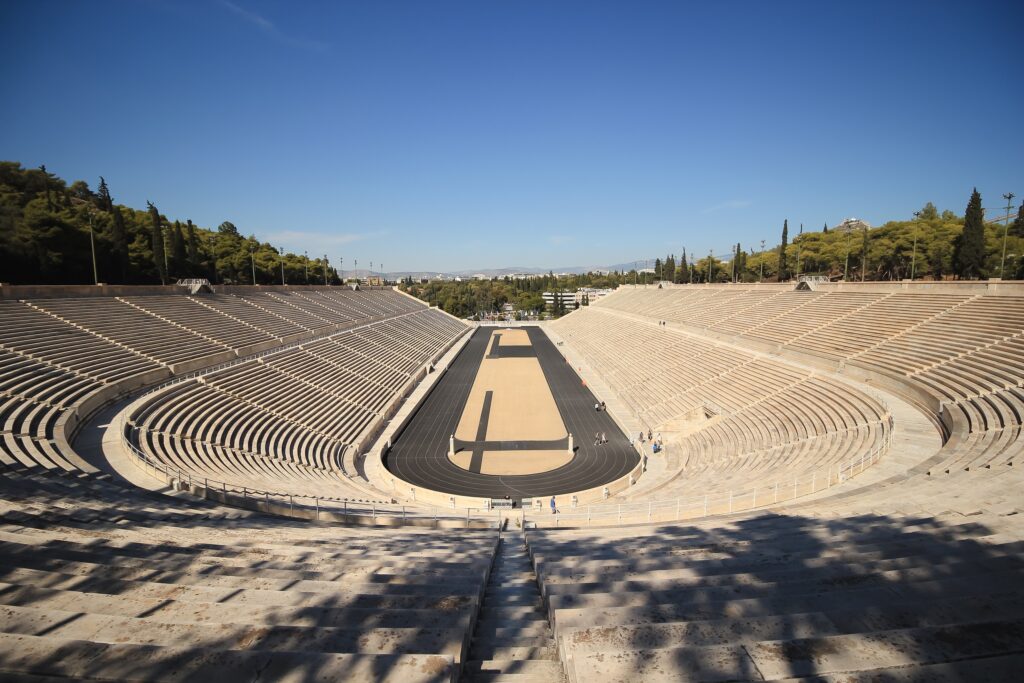
If you haven’t guessed already, marble was the stone of choice for majority of large scale construction in Ancient Greece, and this 45,000 person capacity stadium in Athens is no exception to the rule. Built in 144AD, The Panathenic stadium was one of the largest stadiums of that time, and and has lived through rebuilds and abandonment which almost saw it turn completely to ruins. Thankfully the 1800’s gave the stadium a second chance at life, having been excavated and rebuilt in time for the 1896 Olympic Games where the opening and closing ceremonies were held.
Since then the Panathenic stadium has hosted a variety of sporting activities and concerts between daily use as a tourist attraction, more recently the pop icon sensation Robbie Williams is due to perform at the Panathenic stadium as part of his Robbie Williams Live 2025 tour.
To put the size of Panathenaic Stadium into perspective for modern day use; New Zealands largest stadium, Eden Park, has a capacity of 50,000 people, or Caesars Superdome (Aka home of the superbowl) has a regular capacity of 73,000. The Panathenaic stadium may pale in comparison but to have a stadium of this scale built entirely out of marble over 1,000 years ago is an incredible piece of history.
Watch Changing of the Guards at Syntagma Square
The changing of the guards at Syntagma Square is an impressive spectacle and show of discipline among Greece’s elite soldiers.
Syntagma Square is located in front of the Royal Palace and is the central square of Athens. Designed and constructed in the 19th century during King Ottos’ rule, it forms an important piece of modern Athens both historically and from a social standpoint.
What draws tourist to Syntagma Square is the changing of the guards in front of the tomb of the Unknown Soldier, which is located below Parliament. The ceremony is performed by the elite infantry unit called Evzones, and occurs hourly: 24 hours a day, 365 days a year. A more elaborate changing of the guards ceremony with a band and marching parade takes place every Sunday at 11am.
The ceremony of the changing of the guards in Syntagma Square is a tribute to all Greek soldiers who have died in service to Greece. The Evzones wear a distinctive traditional uniform, and all carry a firearm across their shoulders.
Spend a few days exploring the Greek Islands
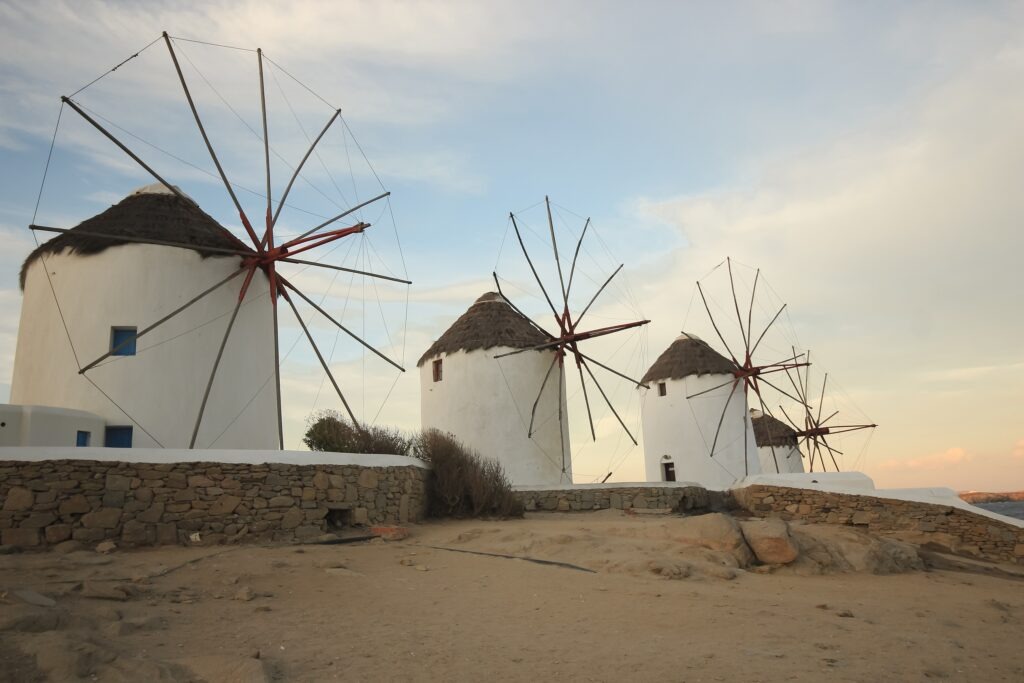
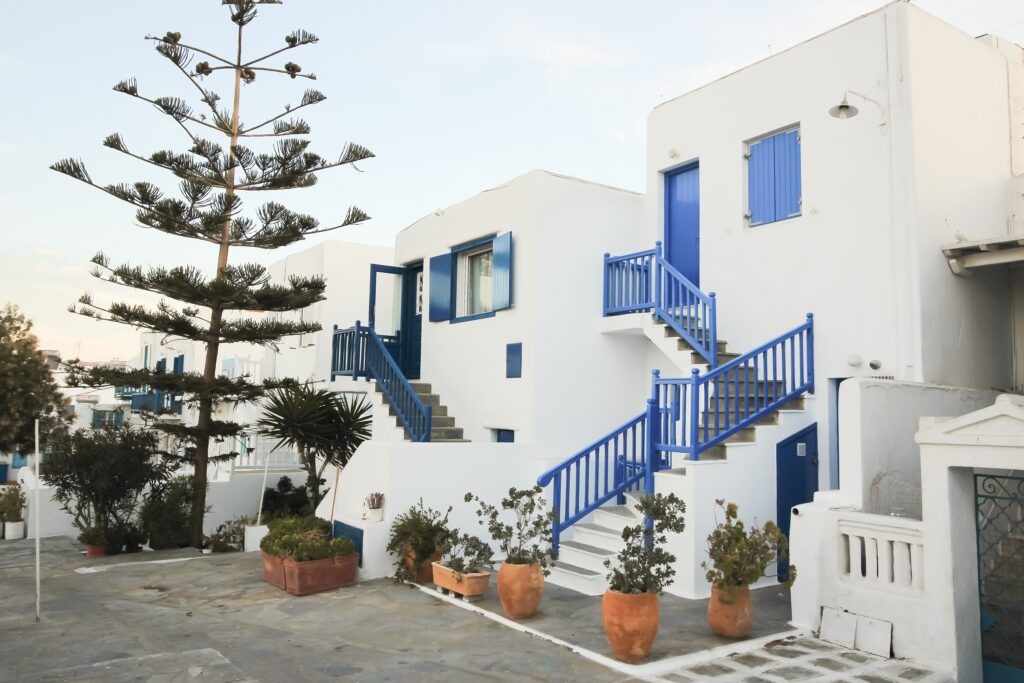
The Greek islands are a great way to explore the more romantic side of Greece; with picturesque white buildings with blue trim filling the streets of Mykonos and Santorini, or historic windmills that border the edge of Mykonos and provide a glorious view for a sunset.
The Greek Islands are accessible by ferry and travel time is all dependent on ferry type and route. So I highly recommend taking a few days to explore each island.
Mykonos
Mykonos is a Greek island lying between Tinos, Syros, Paros and Naxos. Mykonos is well known for its party culture during the summer months which includes beach parties at Paradise and Super Paradise. These Mykonos beach bars sit right on the waters edge and have EDM music playing well into the early hours of the morning.
Mykonos isn’t all about drinking and late night shenanigans though; the historic windmills and anti-pirate streets of Little Venice offer a romantic getaway with picturesque views across the Aegean Sea.
Santorini
I haven’t yet visited Santorini but there are enough photographs online and stories I have heard from friends that give me every reason to make the trip. Santorini is a breathtakingly beautiful Greek Island that takes anywhere between 4 – 8 hours to get to via ferry from Athens. Santorini is famous for its volcanic landscapes, whitewashed buildings and blue domed churches, with the magic truly setting on the island during sunset, creating a breathtaking orange glow across the island.


One Comment
Comments are closed.