5 Amazing Things to do in Prague
Birthplace of the word ‘Robot’ and a beer culture that stretches back at 993AD, Prague seamlessly blends Gothic architecture and fairy-tale enchantment. Enjoy this list of some of the best things to do in Prague; whether you’re taking a cycle tour around some of the weird and wonderful art displays scattered around the city, or strolling along Charles Bridge under a cloak of fog during the early morning sunrise.
Famous for its Christmas markets and a skyline that is carved out with a queue of Gothic spires. Prague is an alluring city full of wonder and bewitching history perfect for nerds of morbid literature.
Charles Bridge
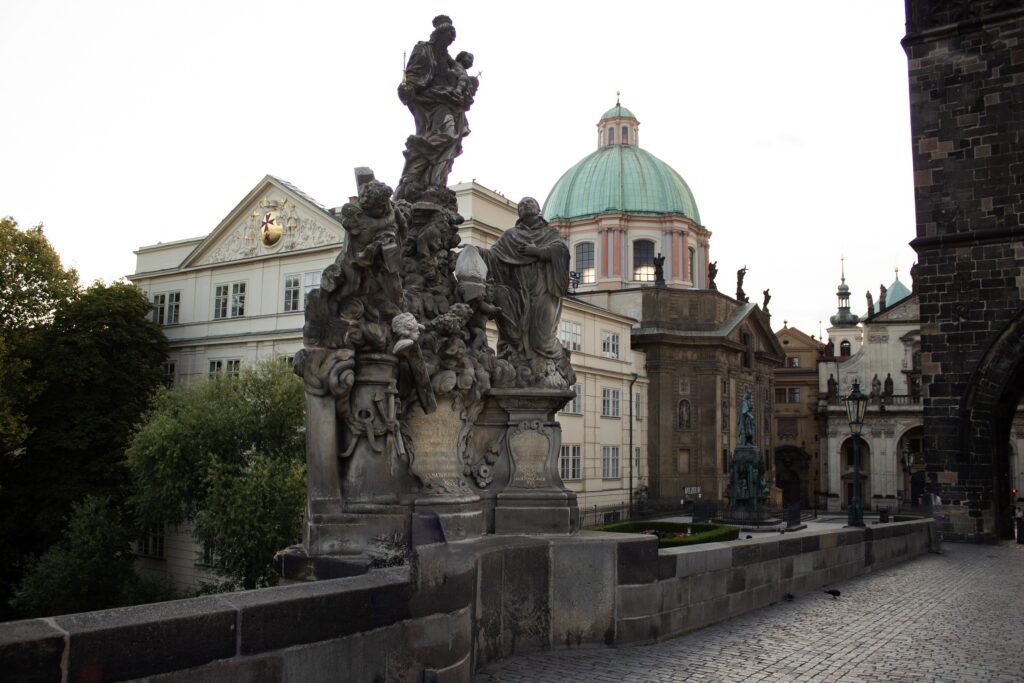
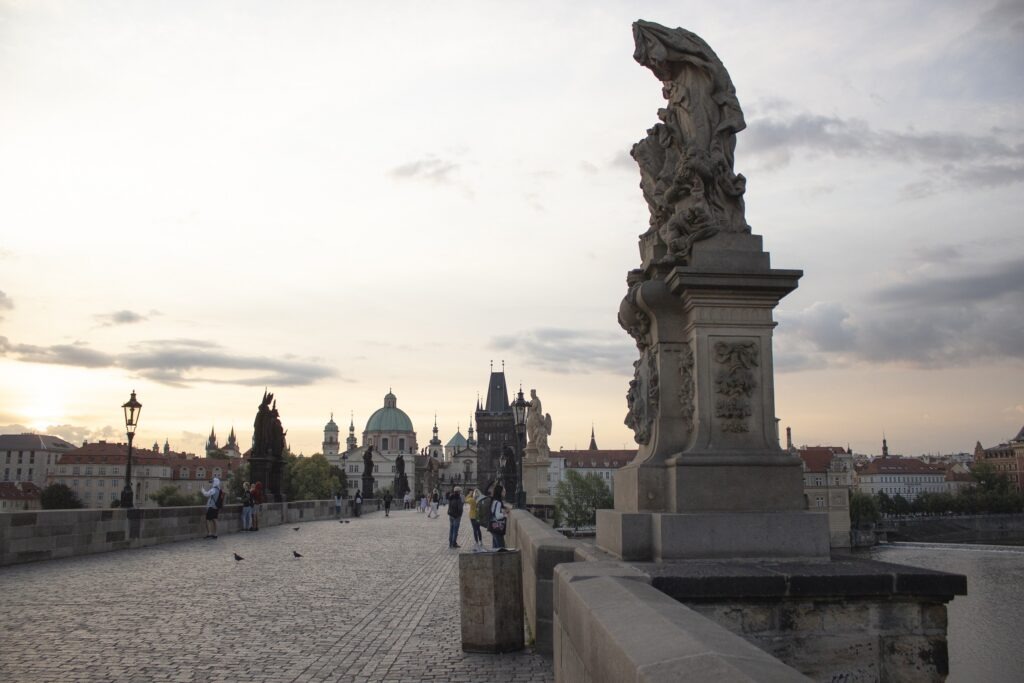
One of the most iconic landmarks in the Czech capital, the Charles Bridge is a must-see when exploring the best things to do in Prague. Spanning 516 meters across the Vltava River, this historic bridge is constructed from Bohemian sandstone and rests on 16 sturdy arches built directly into the riverbed. With its striking Gothic towers and baroque statues lining the walkway, the Charles Bridge is not only one of the most photographed bridges in the world—it’s also a living piece of Prague’s medieval heritage. Whether you visit at sunrise for a peaceful stroll or at sunset for a romantic view, this architectural marvel offers a timeless experience in the heart of the city.
How Old is the Charles Bridge?
Construction on the Charles Bridge began in 1357 to replace the Judith bridge which had been badly damaged by flood waters. The Charles bridge was built in the Gothic style and completed in 1402, during the 17th and 18th centuries 30 Baroque styled statues were added to either side of 516-meter-long bridge in Czech Republic.
Is the Charles Bridge Worth Visiting?
Absolutely! Visiting the Charles bridge is one of the best things to do in Prague. Not only is an amazing tourist attraction in its own right, but it offers stunning views of Prague castle, Lesser Town and the Prague Old Town. Visiting Charles Bridge during sunrise is the best time to photograph this incredible Czech Republic bridge.
Astronomical Clock
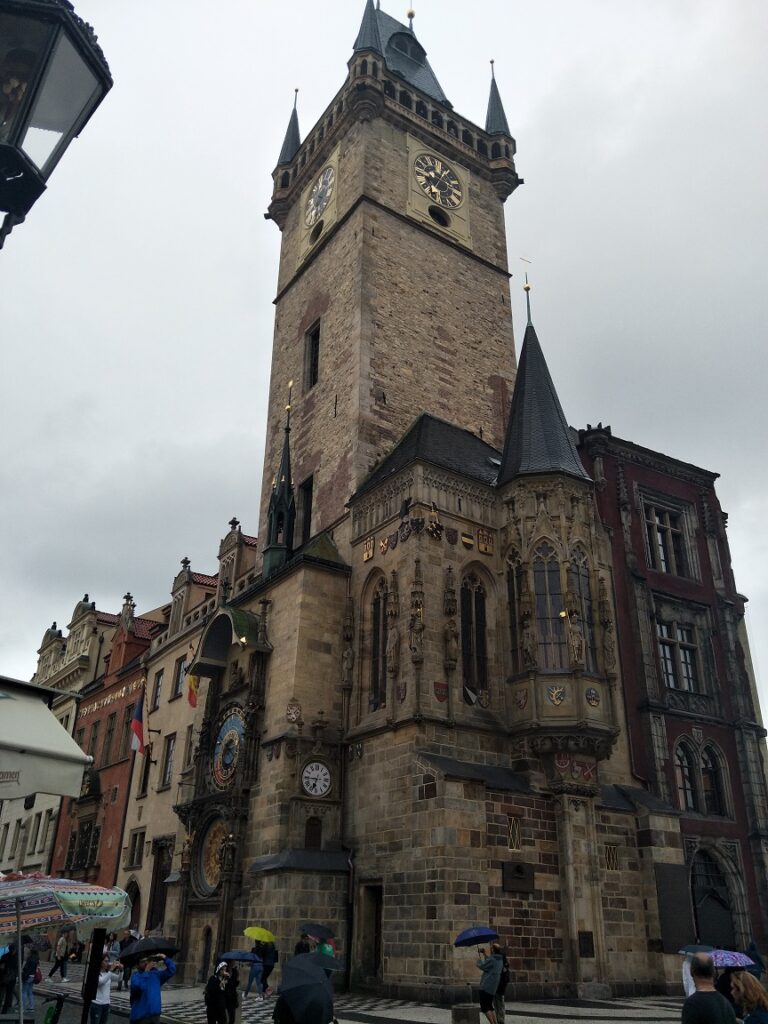
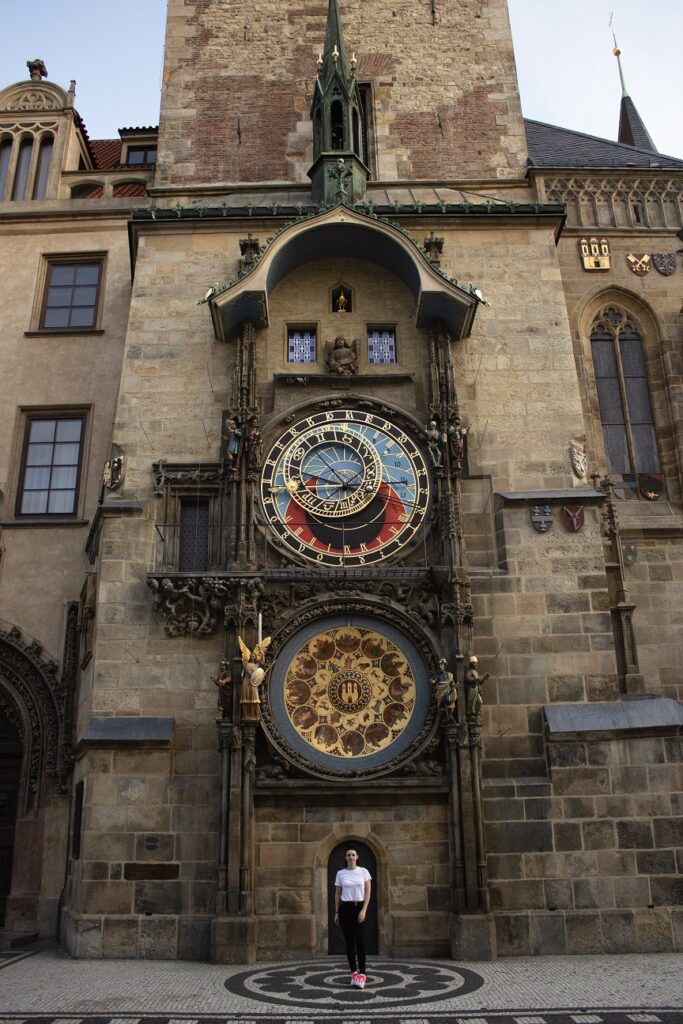
The Prague Astronomical Clock is a large medieval clock attached to the old town hall in the old town square of Prague. Standing at 69.5 meters tall, the clock draws in crowds by the thousands every week. The dial itself has a diameter of 3 meters, which makes the astronomical clock a fan favourite for far sighted fans.
Also known as Orloj, the astronomical clock in Prague was built in 1410 and is the third oldest in the world, but the oldest one still in operation.
This famous Prague clock has a lot of moving parts, many stationary parts and plenty more symbols to represent constellations, planets, and time.
What Time does the Astronomical Clock tell?
The astronomical clock is not just for telling time, it is a complex astronomical device that shows time in multiple formats (different countries etc), the position of the sun and moon, zodiac signs and moon phases as well as equinoxes and solstices. Simple, right?
What is Special about the Astronomical Clock in Prague?
This famous clock in Prague has special mechanisms and dials to display astronomical information; hence the origins of its name. Every hour, on the hour the astronomical clock puts on a beautiful mechanical show where the Twelve Apostles appear in processions, figures like ‘Death’ ring a bell while others; ‘Vanity, ‘Greed’ and ‘Lust’ react to the bell ringing. But no extravagant grandfather clock can go without the classic figurines; a rooster crows and the clocks bells chime.
Prague Castle
Prague Castle is a breathtaking architectural masterpiece and a must-visit destination for history lovers. As one of the oldest castles in Europe—dating back over 1,100 years—this iconic Czech landmark has served as the seat of power for Bohemian kings and Holy Roman emperors. Today, Prague Castle remains a fully functional government building, housing the official residence and office of the President of the Czech Republic.
Recognized as a UNESCO World Heritage Site, Prague Castle is the largest ancient castle complex in the world, spanning an impressive 70,000 square meters.
Can You Visit Prague Castle?
Absolutely! Prague Castle is open to visitors daily from 9 AM to 5 PM, with seasonal variations in hours. A full exploration typically takes 3–4 hours, and guided tours are highly recommended to access hidden areas and learn about the castle’s rich history.
What to Expect at Prague Castle
From the top of Prague Castle, you’ll enjoy panoramic views of the city and its famous skyline of a hundred spires. The Gothic architecture and medieval charm transport you back in time, offering a unique glimpse into the Czech Republic’s storied past.
How to Get to Prague Castle
The most scenic route to Prague Castle is on foot via the historic Charles Bridge, especially if you’re staying on the eastern side of the Vltava River. This walk doubles as a mini tour, allowing you to admire stunning statues and buildings along the way to one of Europe’s most impressive castles.
Powder Gate Tower; Prasna Brana
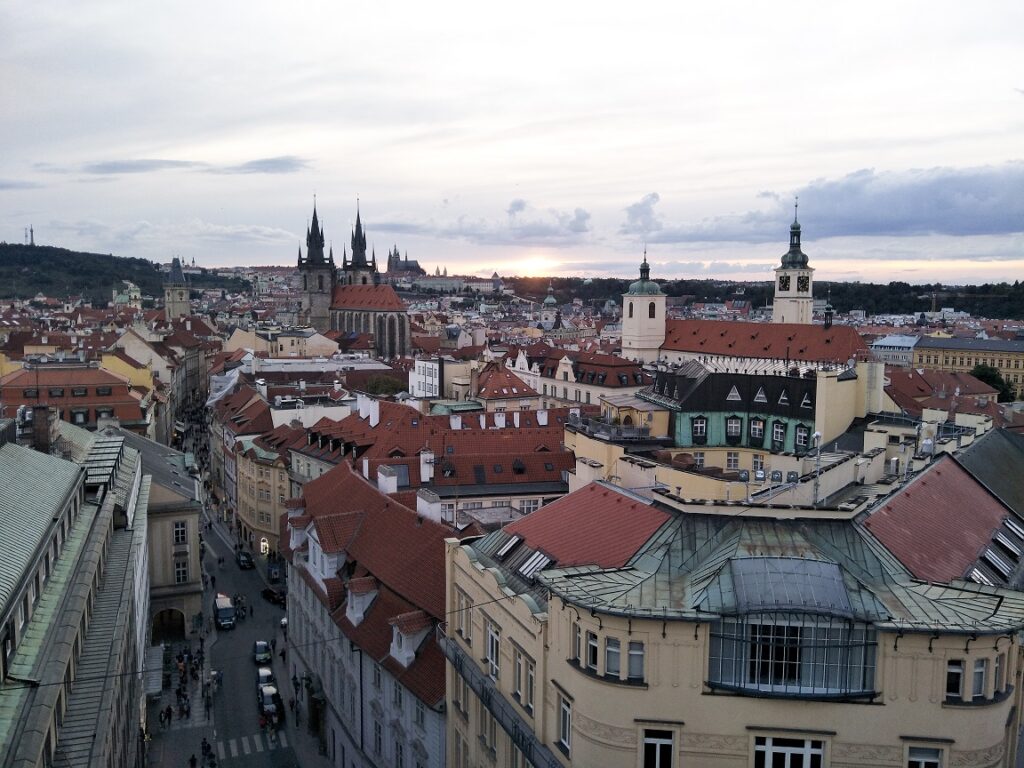
Prague is renowned for its stunning Gothic architecture, and the Powder Gate Tower is one of its most iconic landmarks. Serving as a literal and symbolic gateway into Prague’s medieval past, this historic tower is a must-see for anyone exploring the city.
Is Powder Gate Tower Worth Visiting?
Absolutely! Construction of the Powder Gate began in 1475 as a ceremonial entrance to Prague’s Old Town. By the 17th century, it was repurposed as a gunpowder storage facility—earning its enduring nickname. Today, it stands as a testament to Prague’s rich history and architectural grandeur.
The tower features intricate Gothic stonework, statues, and spires that captivate visitors. Standing at 65 meters tall, the Powder Gate offers panoramic views of Prague, making it a perfect spot for sunset photography. On the viewing deck, you can even spot historic graffiti etched into the stone blocks before World War I.
Communism and Bunker Tour
Get a taste of what life was like during the Cold War and the impacts of communism in the region once known as Czechoslovakia. Visit a real nuclear bunker hidden under Prague, try on gas masks, pose for photos in uniforms and aim fake rifles at your friends while giggling at the dangers of a potential nuclear strike.
The tour guides are experts in the field of historical facts and create a well balanced tour of morbid curiosity, dark humour and a sobering reality. The Prague Communism and bunker tour will leave you in awe of the daily strength Prague locals had to carry everyday, and dread of how different life was between the end of World War II and 1991.
Prague Museum of Torture
The middle ages is renowned for its wars, poverty, pandemics and of course forms of corporal punishment. The most well known being the guillotine, or the stocks for lesser crimes deserving of public humiliation.
Prague is the epitome of spooky Gothic architecture and history predating the middle ages, so it would only be fitting for one of the best things to do in Prague would be to visit the Museum of Medieval Torture Instruments. This torture museum is an incredibly macabre collection of historically accurate forms of corporal punishment. Presenting over 80 of the most famous and horrible machines used for punishment issued by the courts throughout the middle ages.
A list of the torture instruments can be found on their website, I’m not going to get into it as it may not be in every readers taste to read about torture instruments. I highly recommend visiting the museum, it will certainly give you something to talk about over dinner!
Other Things to do in Czech Republic:
Sedlec Ossuary


From torture museums to churches full of skulls; Czech Republic is the home of macabre exhibitions and ghastly history. Drive an hour west of Prague and discover the small town of Kutna Hora.
Kutna Hora has 22,000 inhabitants and is a town founded on mining dating back to the 10th century. Now Kutna Hora has many redeeming features and a lot of historic sights worth visiting, but the one building that brings in tourists by the thousands each year is the Kutna Hora Bone Church.
Are the Bones in Sedlec Ossuary Real?
Yes the bones in Sedlec Ossuary are indeed real, some you can even get close enough to touch. They come from bodies buried in the cemetery between the 14th and 15th century and were dug up due to the cemetery size being reduced. So logically, why not decorate the newly built church with the bones of the dead? A slight inconvenience for those distant loved ones who would like to visit their ancestors grave…”Uncle Freds’ skull is on top of the chandelier, but if you’d like to shake his hand his humerous is over by the 4th pillar.”
Is Sedlec Ossuary Worth Visiting?
If you love morbid history and gruesome stories, then yes Sedlec Ossuary is absolutely worth visiting! There aren’t many places in the world where you can get up close and personal with real human skulls; some died from natural causes, others died from the plague or during wars.
Check out my article for more information on Sedlec Ossuary.